I no longer use this blog, and have moved to the Rocketman page and the Rocketman Auxiliary blog
I enjoyed having this blog, but unfortunately I lost my enthusiasm for it when my friend died. I shall keep this blog alive in so much as it forms a convenient place to store old posts and links.

Sunday, January 17, 2016

Saturday, June 13, 2015
Panzer Leader

By Heinz Guderian
It isn't that I haven't been reading a lot of books lately, its just that I haven't had much inclination to write about them, and also, a lot of what I'm reading at the moment are the Poirot books so there would be quite a lot of repetion I think.
But anyways, here is a topical book for this blog, and quite a good read it was too. Guderian comes across as quitea sympathetic man, which might be surprising given his place in history, along side the rest of the German High Command of the Second World War, but perhaps less so if one is aware of the reputation of the Prussian aristocracy. In describing his actions during the war, one becomes aware of Guderian's humanity and his empathy, mostly to his soldiers, and to his fellow Germans is quite apparent. He keeps his disaproval of Germany's leadership in check, but it seems apparent that Guderian wants to be remembered as a soldier who did his duty to his nation, and to its people. This could be seen as an admirable character trait, and I make no doubt that it was probably what saved Guderian at the Nuremburg trials, but the sad fact is that this same devotion to duty by the German high command is what allowed Adolf Hitler to commit his nation to do unspeakable crimes, and to enter into a conflict they could not possibly hope to win.
Guderian does not shy from his share in the responsibility of Germany's fate, nor does he offer any feeble minded excuses. He explains the situation in a precise and clear fashion, starting in the late 1930's and continuing right through to the aftermath of the war. The middle of the book suffers slightly from this as the war on the Eastern Front is a long and tedious read full of place names one has never heard of, being fought over by units one is largely unfamiliar with (especially the Soviets).
Having said that, if your not interested in the history of the Second World War then this isn't a book for you. I slogged through the many pages of conflict against the soviets and was thankful I am merely a spectator to that horrific and ultimately pointless conflict.
To the end of the book, Guderian offers some interesting observations regarding Hitler and some of the other leading figures of Nazi Germany, and he puts the German High Command into a useful perspective, explaining how it came to be the way it was, historically speaking, and why it developed the way it did under Hitler. I for one, have a much better understanding of the way the Germany leadership functioned, and how and why it failed. Guderian doesn't hold back his punches. On the whole an interesting book though a little dry in the middle.
3/5
Wednesday, June 03, 2015
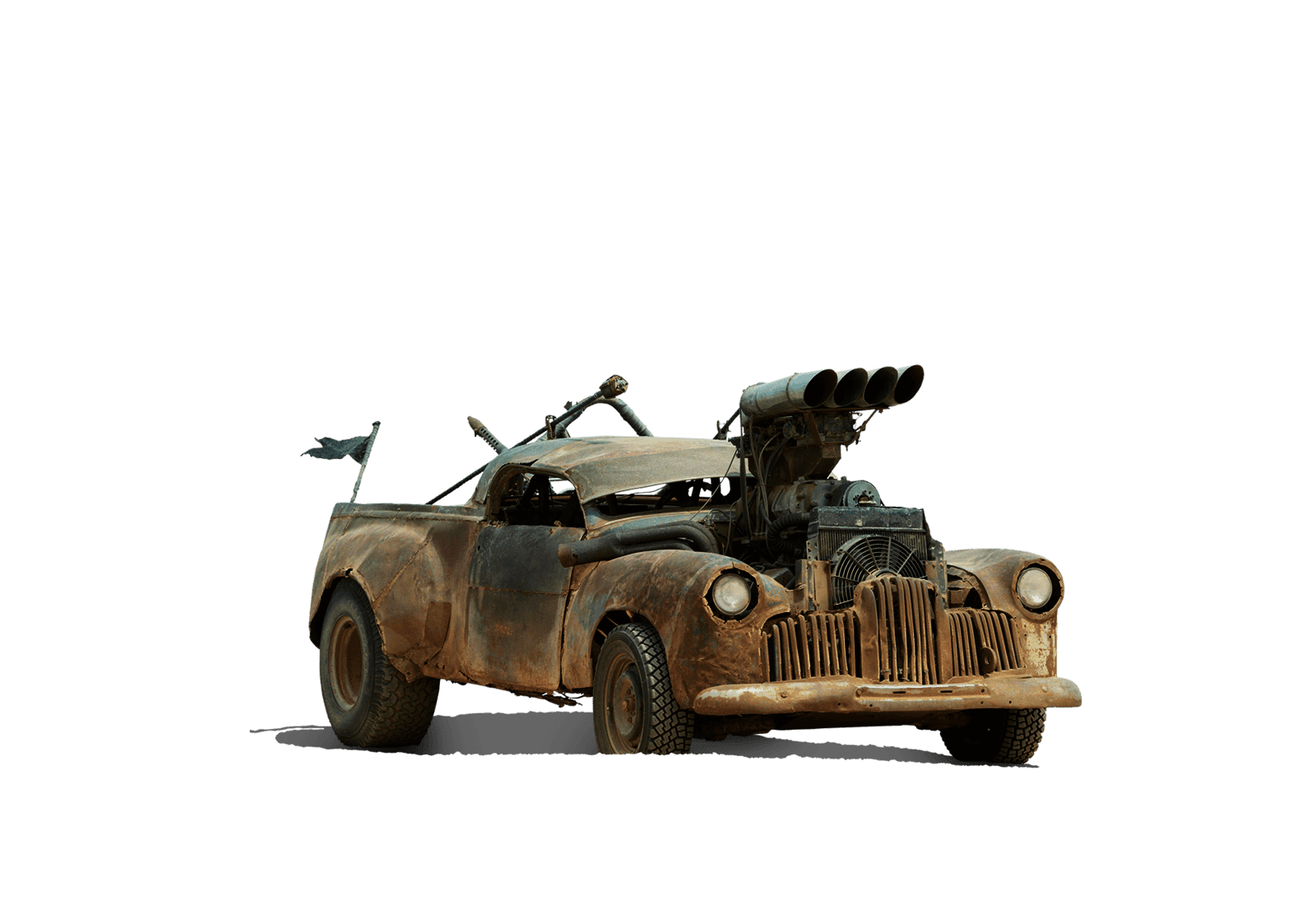
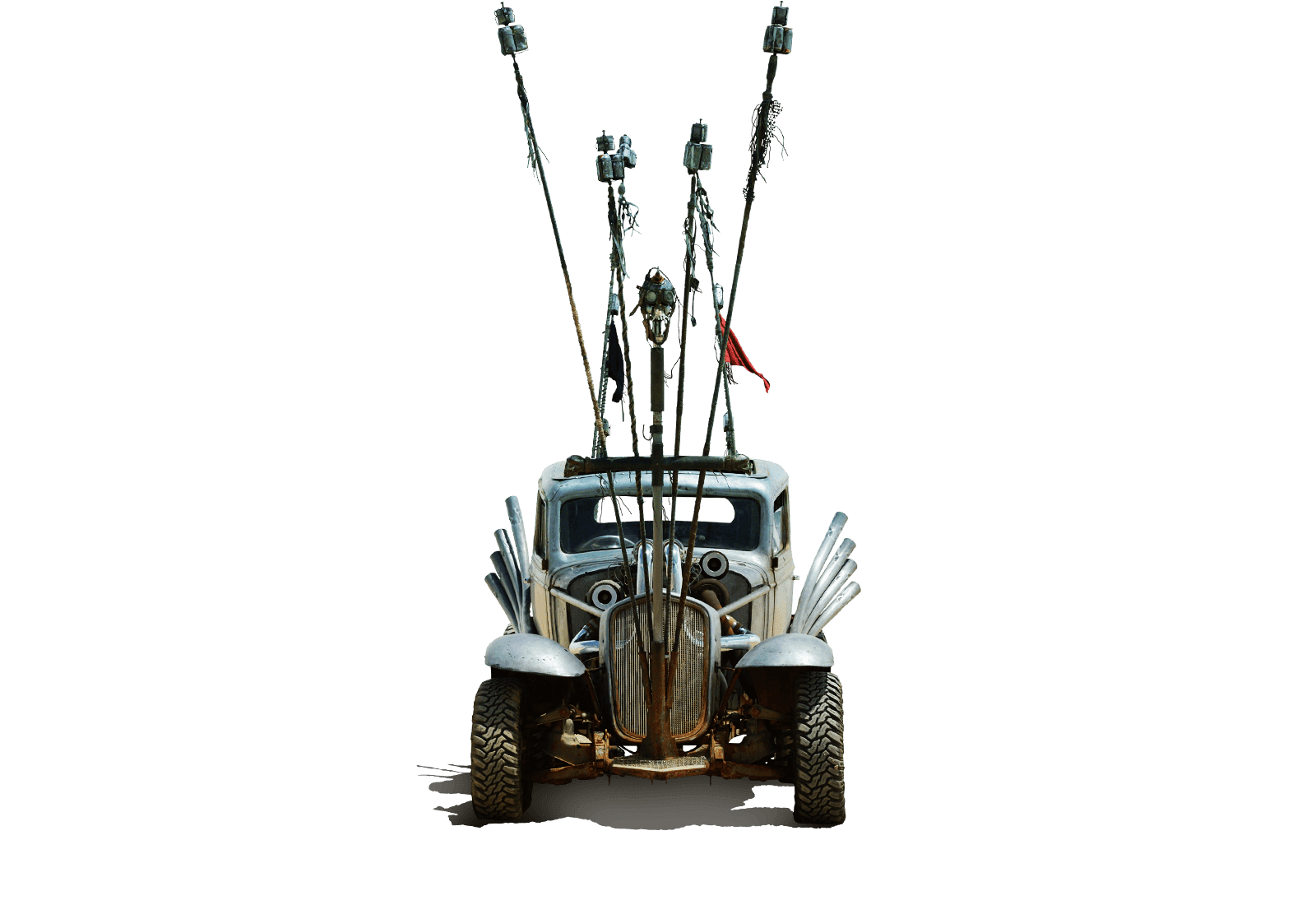
Mad Max vehicle gallery
I never played Battlecars or Car Wars, but it wasn't for lack of interest. On the contrary the box art always appealled to my teenage sense of post apocolyptic aesthetics and when I fnally got to see the original trilogy, my interest in the vehicles was only heightened ever the more. But still, I never got the opportunity to try my hand at that type of game and I never had recourse to build post apocolypse models. Unfortunately I still don't, but once again it isn't for a lack of desire.
Its interesting to note that the body forms of the cars so often chosen by the artists, model makers and film prop deptartment, are of older cars, invariably from the 1950s, with an odd 70s muscle car thrown in, much as it was with Battlecars and Car Wars too.
 -
-
 -
- -
-
 -
- -
-
 -
-
 -
- -
-
 -
- -
-
 -
- -
-
 -
- -
-
 -
- -
-
 -
- -
-
 -
- -
-
 -
- -
-
 -
- -
-
 -
- -
-
 -
- -
-
 -
- -
-
 -
- -
-
 -
- -
-
Its interesting to note that the body forms of the cars so often chosen by the artists, model makers and film prop deptartment, are of older cars, invariably from the 1950s, with an odd 70s muscle car thrown in, much as it was with Battlecars and Car Wars too.
 -
-
 -
- -
-
 -
- -
-
 -
-
 -
- -
-
 -
- -
-
 -
- -
-
 -
- -
-
 -
- -
-
 -
- -
-
 -
- -
-
 -
- -
-
 -
- -
-
 -
- -
-
 -
- -
-
 -
- -
-
 -
- -
-
 -
- -
-
Subscribe to:
Posts (Atom)