Showing posts with label EYW. Show all posts

Sunday, April 19, 2015

For Sale: Perry ECW Musketeers, Dragoons and Cuirassiers


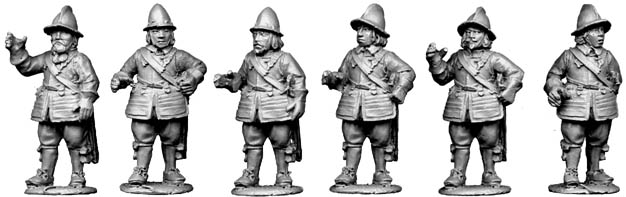
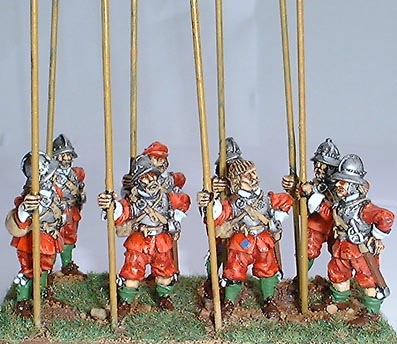
These figures were bought for our Eighty Years War project, but that was cut short by Oleg's untimely death. Without him, I have no reason nor inclination to continue the project so I am offering these figures for sale. I was going to put them e bay but I am posting them here first in case any one has an interest in them. The figures are in good condition, unpainted and entirely untouched. The price on Perry's site for the figures would be £164 not including P&P. But I am only asking £100 (€138) +P&P.

Included are:
ECW2 Foot command (6 figures)
ECW4 Armoured Pike, with tassets (24 figures)
ECW6 Unarmoured Pike, half helmeted (24 figures)
ECW8 Musketeers firing (18 figures)
ECW9 Musketeers loading (6 figures)
ECW11 Dragoons/Forlorn Hope skirmishing (12 figures)
ECW13 Demi-Culverin (9 pounder gun) with crew (2 cannon + 8 figures)
ECW 15 Cuirassier Command (3 mounted figures)
ECW16 Cuirassiers with swords drawn (9 mounted figures)
ECW 26 Mounted Dragoons (6 mounted figures)

Saturday, October 15, 2011

Dutch army dreams

Slowly growing stronger, my long term Dutch army project has now received its first contingency of cavalry in the form of 12 cuirassiers and 6 dragoons. I've also bought a copy of the 'Field of Glory; Rennaisance' rulebook and as a consequence, we're looking at 6 figures for an infantry element and two horses for each cavalry element. This means that my small army has 9 cavalry elements, 10 infantry elements and 2 artillery elements. Enough I think to start painting!

Friday, February 04, 2011

More and bigger guns!


Reinforcements have arrived to bring the Dutch army up to something approaching fighting strength, and a general has been found to take command. Still got a way to go before we're ready to take on the Spanish, but the big gun should make an impression! I think I need a few more skirmishers though, and possibly some more pikes, and another cannon or three, and some cavalry wouldn't go amiss...

Saturday, January 29, 2011

moif world update


Only a few weeks left before our second daughter is born, and things are running slow but steady. Mette is as big as its possible to get now and eager to get it over with and I can't say I blame her. It looks very uncomfortable when she has to get in and out of bed, or pick something up off the floor.


In other news, being unemployed again isn't so bad but the economic situation is starting to look desperate. I may have just saved myself though as on Wednesday Goeg, Mette and I attended a meeting with a publisher and she expressed a desire to publish a series of children's colouring books, illustrated by yours truly. If the deal works out, then its potentially good enough to keep me employed for a year. Nothing has been officially signed yet though, Fingers crossed.


The Eighty Years War project is moving slowly. I've ordered another batch of figures from Perry and they should arrive within the next week. We've still not got a set of rules but we may go for 'Field of Glory; Rennaisance'. I still have no idea which colours to paint Nederlanders of the Dutch Rebellion, and I can't find any info on the net. I'm leaning towards earth tones and shades of brown with lots of orange sashes, feathers and flags as I gather the Dutch weren't all that organised into regular armies during the early days.

Sunday, January 09, 2011

The first recruits!

The first Dutch regiment begins to form with 12 musketeers and 6 pikemen (equalling 6x100 men) from Perry Miniatures which arrived yesterday. I still haven't found any good source for uniform colours yet, and we still need to establish bases sizes for playing DBR in 28mm, but the Dutch commanders are optimistic that the Seventeen Provinces will soon find victory on the field! I reckon another 412kr (cira £45/$71) will see a Dutch infantry army (with artillery support) ready to muster.

The figures are very nice. They're some what diminutive compared to Black Tree Design (which I used for my Normans/Teutons) or Copplestone Castings (Rocketman), but the poses are nice and the detailing is superb.


I also came across another manufactuer of ECW figures today. Eagle Figures have a limited but pretty well sculpted range. An infantry regiment (36 figures) would come to circa 269kr which makes them very interesting.

Tuesday, December 28, 2010

Duyfken


Believe it or not, but that is a replica of the Dutch ship which discovered Australia in 1606. I can't begin to imagine how sailing in a ship of that size in the 1600's must have felt. Even a modern vessel tossing about like that would have me puking my guts out. To be out in the middle of the Indian Ocean, with no communications with the outside world, and not knowing quite where you were, must have been mind altering. Its little wonder old works of literature relate that sailors could never settle down to life on shore when they grew old.

The original Dufken was an eight gun, twenty metre long barque, with a displacement of one hundred and ten tons. She was a light warship, or Jacht belonging to the Nederlands. She saw battle against a blokading Portuguese fleet in 1601 under admiral Wolphert Harmensz at Bantam and helped end the Iberian dominance of the Spice Islands. She lived a short life, ending her days on the beach after a severe mauling by three Spanish galleys at Makian Island in 1608.

Official Duyfken homepage
A second video on You Tube

Monday, December 27, 2010

Planning the Eighty Years War Part 2; Manufacturers of European miniatures pertaining to the sixteenth and seventeenth centuries.

A few years ago I worked out a comparison of the most expensive manufacturers and its been quite an eye opener to see how prices have changed in the mean time. Back then Essex Miniatures were the cheapest of the companies I had book marked and Games Workshop (followed by Foundry) were the most expensive. GW was so expensive they were over five times as much as Essex for a single figure.

Perry Miniatures, (28mm) English Civil War range. I think I like these the best. They look suitably generic enough to pass for Nederlanders, and Perry (whilst slightly small) usually have a nice amount of detail and character.
The price for six figures is £6.00 + 17% P&P. This translates to 368kr for an infantry regiment.

Copplestone Castings' (28mm) Glory of the Sun range. I really like Copplestone's figures, but they do tend to be a bit on the big size, (more like 32 than 28mm). The best part is the range has specific Dutch musketeers. The bad part is, they belong to the period directly after the EYW and may not fit well with Perry's figures.
The price for six figures is £6.75 + 10% P&P. This translates to 384kr for an infantry regiment.

Essex Miniatures (25mm) 14th to 17th Century Dutch range. These have the advantage of being specifically Dutch, but frankly, they look like crap and I can't see myself going for them. As 'Dutch' they just don't look all that much different from the Perry English Civil War range, except in quality.
The price for one figure is £1.00 + 30% P&P. This translates to 407kr for an infantry regiment which actually makes them more expensive than the Perry or Copplestone figures.

Foundry Miniatures (28mm) Elizabethan range. I don't like Foundry. They are simply over priced and subsequently the quality they offer (poses & variations) is a joke.
The price for eight figures is £13.20 + £10 P&P. This translates to 662kr for an infantry regiment.

Bivorne Miniatures (25mm) English Civil War range. This is a nice range of miniatures which I came across by accident. Admittedly they are more expensive than most, but they have a very wide range of poses and they are suitably generic enough to be Dutch.
The price for eight figures is £9.00 + 15% P&P. This translates to 451kr for an infantry regiment.

Renegade Miniatures (28mm) English Civil War range. These are nice and generic enough for me, and Renegade have a suitably wide range of troop types. I might consider mixing these figures with Copplestone and Perry in order to break the monotony of figures per base.
The price for eight figures is £6.95 + 30% P&P, which translates to 395kr for an infantry regiment. Renegade also have regiment prices but their regiments are 24 mixed figures.

Tradition of London (25mm) English Civil War range. These figures look very old fashioned and given the name and age of the company, I think they specialise in a much older game than anything I'm interested in. I don't care for the sculpts at all and the range of poses isn't anything that counter balances the poor quality of the figures.
The theoretical price for one figure is £0.95 + 20% P&P. This translates to 358kr for an infantry regiment. The only trouble is, the online shop doesn't allow for a purchase of 36 figures so in order to make a regiment, one would have to buy 50 figures.

Redoubt Enterprises (25/28mm) English Civil War range. Redoubt seem to be similar to Essex, but I've never bought anything from them so I have no idea what they are like. The images they have on their site indicate a mediocre quality with a reasonably wide range of poses.
The price for one figure is £1.10 but P&P to the 'rest of the world' is determined 'by weight' which makes it impossible to guess how much a regiment might cost. There is a regiment deal of £30 for a thirty figure regiment pack, but this is still without any idea of P&P. I'm guessing they are too expensive to be worth considering.

Edited to add;

Front Rank (28mm) Late 17th Century range.
The price for one figure is £1.05 + 20% P&P. This translates to 395kr for an infantry regiment

Second edit;

Warlord Games (28mm) Pike and Shotte range. Plastic figures which sell in unit boxes. Each infantry box contains 4 pikemen and 8 musketeers. Quality seems good but I have a prejudice against plastic figures which I find annoyingly light and easy to knock over.
The price for twelve figures is £7.00 + 10% P&P. This translates to 201kr for an infantry regiment which makes these figures very attractive, despite being made of plastic.

Reiver, via Under the Bed. (28mm) Covenanter Rebellion range. (1666 - 1679). The sculpts seem decent enough, but the figures look too a tad too modern for the Dutch Rebellion.
The price for ten figures is £10.00 + 20% P&P. This translates to 419kr for an infantry regiment

Parkfield (25mm) Glorious Revolution range. These are much like Reiver's Covenanters. They look good enough to grace the tabletop, and they are decently cheap, but they look too modern for the Dutch Rebellion. Not enough in the balloon pants department!
The price for one figure is £0.70 + 25% P&P. This translates to 275kr for an infantry regiment

The Assault Group (28mm) Rennaisance range. This looks like a nice big range with multiple European nations represented (those in the image are German) and a wide range of poses. The biggest draw back is the price which is not as bad as Foundry's, but still high enough to be uncompetative.
The price for four figures is £5.95 + gratis P&P. This translates to 468kr for an infantry regiment

Sunday, December 26, 2010

Vlieboot


During Christmas I spent a good many hours researching the Eighty Years War, the Dutch Rebellion and the ships used by the Dutch in their wars against Spain... or at least I tried to, but the online resources available on small Dutch fighting vessels of the sixteenth century is at best, beguiling.

I'm specifically interested in a type of ship used by the Sea Beggers (Geuzen), known as a flyboat, which in Dutch translates to a Vlieboot, or a Vliet, the reason for which is explained by Wikipedia;

The role of the budding Dutch navy in the defeat of the Spanish Armada in August, 1588, has often been under-exposed. It was crucial, however. After the fall of Antwerp the Sea-Beggar veterans under admiral Justinus van Nassau (the illegitimate elder brother of Maurice) had been blockading Antwerp and the Flemish coast with their nimble flyboats. These mainly operated in the shallow waters off Zeeland and Flanders that larger warships with a deeper draught, like the Spanish and English galleons, could not safely enter. The Dutch therefore enjoyed unchallenged naval superiority in these waters, even though their navy was inferior in naval armament.


As to what exactly a Flyboat looks like is still something of a mystery, I came across one description of size, but without any illustration;

a "Vlieboot" (also called a vliet, a boat that could be sailed through the "Vlie", i.e.. to open sea). The size of such seaworthy jaghts was between the 15 and 80 last (A last is a: A measure of volume for ships; and b: A measure of cargo/deadweight capacity; a last is 2000 kg), at a maximum length of 135 voet (A voet is a measure of length; a Rijnlandse voet is about 30 cm) and a width of 25 voet. The water replacement was around the 540 tons.
Source.


So I'm looking at an auxiliary warship from 70 to 200 tons in displacement, good for littoral combat and used successfully by the Geuzen. They sound perfect for table top skirmishes in 28mm, and I fully intend to build two of them (I'll need them if Oleg goes ahead with his plan to launch a pair of Fustas!) The Spaniards had their own Vlieboot fleet though. They were allied to the Dunkirkers who were a particularly annoying thorn in the side of the United Provinces of the Nederlands...

The [Vlieboot] resembled a small carrack and had two or at most three masts, a high board and a dozen iron cannon. Small, inexpensive and manoeuvrable, it was ideal for privateering activities in the European coastal waters and soon imitated by privateers or pirates of other nations. The Dutch navy, and their enemies, the Dunkirkers, at first extensively employed flyboats.


Another teasing web page describes the Vlieboot as a forerunner of the famous Fluyt. Only smaller. Google image search dredged up a number of images, the best one's are all gathered in this post, but none of these images gives a clear idea of what a Vlieboot actually looks like, though they are quite seductive from the modelling point of view... The top image shows multiple vessels which all seem to have a certain resemblence with the various descriptions I've read and its my favourite illustration so far, the second image kind of fits the description but lacks the leeboards which are a recurring feature of the first image. I think the second image might actually be a bad drawing or possibly a caravel thats been mislabelled...

The third image was labeled as a 'fly boat' but doesn't really fit with the descriptions. Crucially it has a fo'csle and quite a deep draught and I believe it may be a mislabeled schematic of a small barque, possibly a vessel akin to the Duyfken. It certainly fits with the era, and I may possibly even attempt such a model one day, but its not what I'm looking for now.

The fourth image is possibly the most helpful. It came from a Dutch language site and shows a Vliet from 1770. Since the Vlieboot was an armed development of existing commercial designs, I'm inclined to believe that the last image supports the first image. All I need now is to find some one who has built a model of one of these Vlieboots, for a maritime museum for example.


This last image is typical. The vessel on the right fits the description of a commercial vlieboot, but the image was posted as an illustration of the vessel to the left which is a galleon.

Monday, December 20, 2010

Planning the Eighty Years War


Over the last six years or so I've gradually bought generic and Rocketman-specific figures, the idea being to provide the props for all the table top games my friends and I have played. I have now, more or less reached the point where I can provide elements for most bog standard medieval or fantasy war games, providing for four players with roughly twelve elements per player. There are a few gaps of course, I have more armoured than unarmoured figures, and I don't have any cannon or hand gunners yet, but on the whole I'm more or less covered now and I'm pondering the next ten years... Where to go next?

Most of our games have been small scale skirmish games. This is because our interest in table top war games grew out of role playing, which we have all played for many years (over a century if you add them all together).

Over the last five or six years then, we've played any number of games, some of which have been quite large and ambitious (by our standards). What we've never played however, is historical battles. All that is set to change now. My funding is limited and my time frame extends over the course of the next five or ten years but for some time I've been pondering building up an historical army and I've had several candidates in mind.

Imperial Romans were my initial thought, because I've always loved that period, and because I found Iron Mitten's Roman blog posts to be very inspiring. Samurai of the Sengoku period were my second thought as I've always loved Samurai movies and the English Civil War was my third thought as the ECW offers a wide variety of weapons and troop types with masses of literary resources available. Speaking with my friend Oleg however, my thoughts ranged further afield to the Eighty Years War which offers the same choice of weapons and troop types but a much wider variety of forces (and thus uniforms and heraldry). The EYW also offers the chance to explore naval battles using galleys and carracks, which in 28mm means building (and finishing) those models I began a few years back.

As of yet, I've not decided on what I'll focus on, but I'll probably be the Protestant Dutch (with English allies?) against Oleg's Catholic Spanish.